If you’ve seen crowds wrapping around a building on Saturday mornings, you’ve probably found a bin store—a retail format built around the thrill of discovery and deep discounts. Here’s everything you need to know before you dig in.
The Short Version
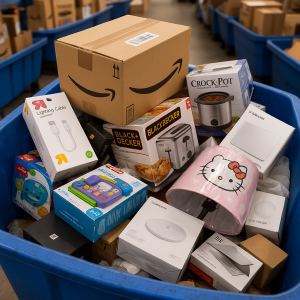
A bin store buys customer returns, shelf pulls, and overstock from major retailers and logistics companies. Instead of pricing each item individually, merchandise is dumped into large sorting bins and sold at a flat price that drops each day until the next weekly restock.
Typical weekly ladder:
Sat $16 → Mon $10 → Tue $6 → Wed $3 → Thu $1
(Friday is restock day; store is closed to the public.)
Where the Stuff Comes From
-
Customer returns: Items sent back for reasons ranging from “changed my mind” to “damaged packaging.”
-
Overstock & shelf pulls: Brand-new items stores need to clear for space.
-
Mixed liquidation truckloads: Palletized goods purchased by the truck and sorted into bins.
Expect a mix of electronics, home goods, tools, toys, apparel, small appliances, and random surprises—that’s the point.
Why People Love Bin Stores
-
Treasure hunt energy: Every week is different; high-value items are mixed in.
-
Flat pricing: No barcode scanning at every step.
-
Budget-friendly: The longer you wait in the week, the cheaper it gets.
-
Sustainable: Buying returns and overstock keeps usable goods out of landfills.
How a Bin Store Works (Step by Step)
-
Restock Friday: Staff receives truckloads, weeds out true junk, and fills bins to the brim.
-
Saturday Drop: Highest flat price, best selection. Lines form early.
-
Daily Price Drop: Prices fall as selection thins.
-
Reset: Thursday clears the floor, then the cycle starts again.
What to Expect In-Store
-
Randomized bins: No category aisles—dig to discover.
-
Designated check area: Open and test items away from the bins (usually a time limit applies).
-
One cart per group & card/debit only: Keeps checkout flowing.
-
All sales final: Because inventory is liquidation, returns are typically not accepted.
Tips to Win the Hunt
-
Come early Saturday for the best finds; follow store social for teaser posts.
-
Wear comfortable clothes & bring patience—bin digging is physical.
-
Know your prices: Use the check area to quickly verify value.
-
Have a plan: If you love premium items, shop early; if you love bargains, come mid-week.
Common Myths—Busted
-
“It’s all broken.” False. Returns include unopened or lightly used items; stores remove obvious junk.
-
“It’s just leftovers.” Weekly truckloads keep inventory fresh and unpredictable.
-
“No good brands.” You’ll routinely see national brands across categories.
Is It Safe & Ethical to Buy Returns?
Yes—bin stores buy legally from authorized liquidators. Most offer a safe product check area, visible security, and clear rules to keep the experience fair for everyone.
Who Shops at Bin Stores?
-
Deal hunters & students stretching budgets
-
Resellers flipping finds on eBay, FB Marketplace, and local apps
-
DIYers & makers looking for parts and project supplies
-
Families grabbing household goods at steep discounts
The Business Side (Why Prices Can Be So Low)
Bin stores buy at a fraction of retail by taking mixed returns and overstock at scale (often by the truckload). Labor goes into sorting, not stickering, which keeps operating costs down. The flat-price ladder clears inventory weekly, so cash recycles into the next truck.
FAQs
Are the items new? Mix of new, open-box, and like-new returns.
Can I return or exchange? All sales are final. Use the check area to inspect.
What payments are accepted? Card/debit only.
When should I line up? Early Saturday. Follow our socials for teasers.
Is there a limit per person? Most stores allow one cart per group; some stores limit items to $1–$3 days—check posted rules.